MODERNISING SYARIAH CRIMINAL JUSTICE: THE IMPERATIVE OF DIGITAL FORENSIC SCIENCE AND EVIDENTIARY REFORM IN MALAYSIA
DOI:
https://doi.org/10.33102/inslae-proceedings.266Keywords:
Digital forensic, forensic science, Syariah criminal law, Islamic law of evidenceAbstract
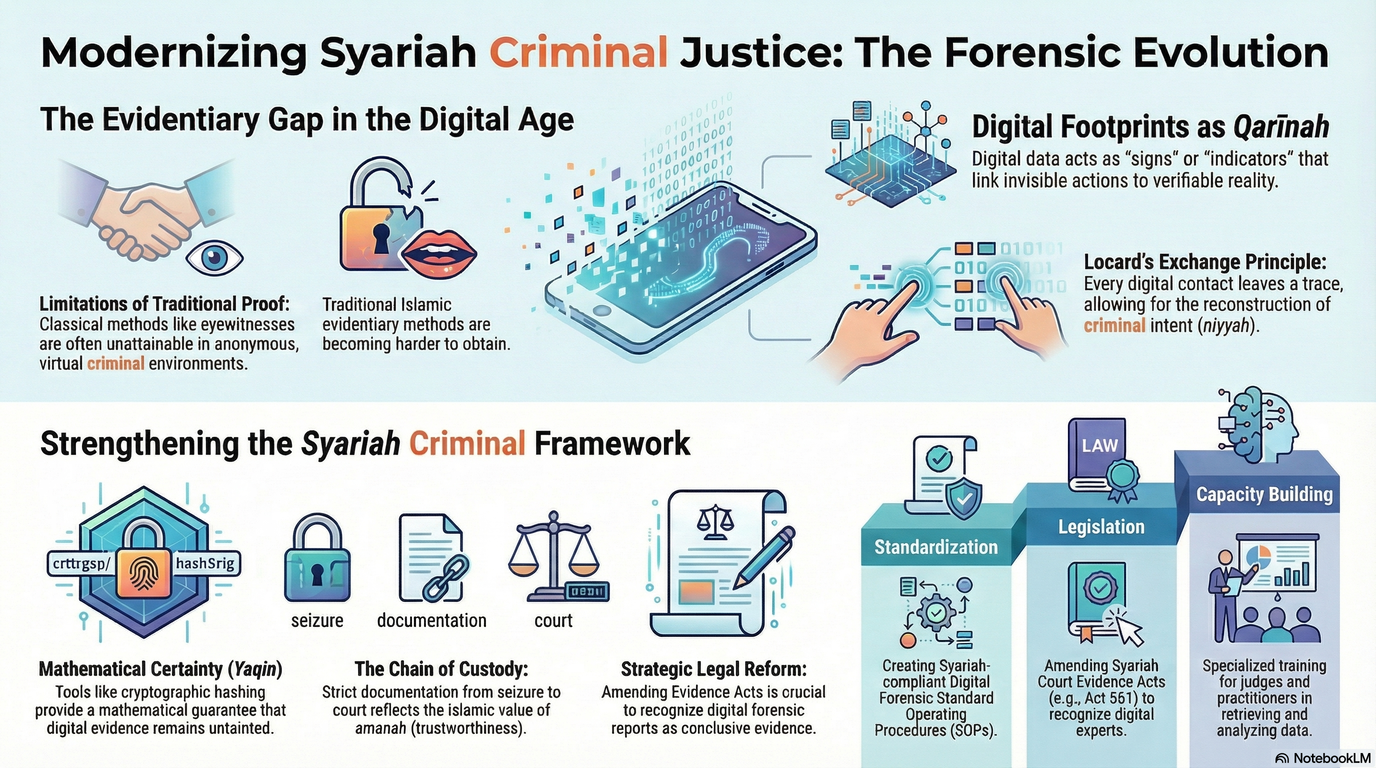
The rapid evolution of science and technology has fundamentally transformed the landscape of modern criminality, leading to a rise in cyber offences that challenge the traditional boundaries of the Malaysian Syariah criminal justice system. As criminal activities migrate to the digital realm, the reliance on conventional evidence is increasingly being supplemented by digital footprints. However, the integration of digital evidence faces significant hurdles, primarily due to the rigid requirements of classical evidentiary methods such as iqrar (confession) and shahadah (eyewitness testimony), which are often unattainable in anonymous virtual environments. Furthermore, the lack of standardised procedural guidelines for handling electronic data creates a legal lacuna that may jeopardize the admissibility of such evidence. This study therefore aims to evaluate the role and significance of digital forensics as a form of qarīnah muʻāșirah (contemporary circumstantial evidence) within the Syariah legal framework. Adopting a qualitative research design, this study utilises document analysis to examine relevant literature and legal texts. The gathered data is then analysed and presented through a thematic approach, categorising findings into key themes. The findings indicate that digital forensics, through rigorous processes such as cryptographic hashing and the “chain of custody”, provides a scientifically objective basis for proof that aligns with the Syariah principle of yaqin (certainty). The study highlights that the technical capabilities of modern forensic tools can effectively reconstruct digital events and establish intent (niyyah) in cyber-crimes. This research is significant as it provides a fundamental bridge between forensic science and Islamic jurisprudence, offering insights for policymakers to reform existing evidence laws. In sum, the recognition of digital forensics as a robust form of qarinah is essential to ensure that the Syariah courts remain dynamic, equitable, and responsive to the complexities of the digital age.
Downloads
References
Al-Azhar, M. N. (2012). Digital forensics: Panduan praktis investigasi komputer. Salemba Infotek.
Alias, M. A. A., Wan Ismail, W. A. F., Baharuddin, A. S., & Abdul Mutalib, L. (2021). Legal analysis of Syariah Court evidence law on digital document as evidence and its admissibility in court proceedings. Journal of Management and Muamalah, 11(2), 54–64.
Alias, M. A. A., Wan Ismail, W. A. F., Baharuddin, A. S., & Syah Mallow, M. (2024). Wasa’il Ithbat dalam undang-undang keterangan Islam: Analisis perundangan terhadap keabsahan dokumen elektronik di Mahkamah Syariah Malaysia. Malaysian Journal of Syariah and Law, 12(1), 1–15.
Alias, M. A. A., Wan Ismail, W. A. F., Baharuddin, A. S., Hashim, H., & Tuan Ibrahim, T. M. F. H. (2025a). Digital forensics and the admissibility of electronic evidence in Malaysian Syariah courts: Towards a standardised legal framework. LexForensica: Forensic Justice and Socio-Legal Research Journal, 2(1), 84–91.
Alias, M. A. A., Wan Ismail, W. A. F., Baharuddin, A. S., Hashim, H., & Tuan Ibrahim, T. M. F. H. (2025b). Digital forensics and the authentication of electronic evidence: Enhancing integrity, admissibility, and legal reform in Malaysian Syariah courts. Syariah and Law Discourse, 6(1), 7–14.
Baharuddin, A. S. (2017). The integration of forensic science fundamentals and Al-Qarinah towards achieving Maqasid Al-Shari'ah (Doctoral dissertation). Universiti Teknologi Malaysia.
Casey, E. (2011). Digital evidence and computer crime: Forensic science, computers, and the internet (3rd ed.). Academic Press.
Goodison, S. E., Davis, R. C., & Jackson, B. A. (2015). “Digital evidence and the U.S. criminal justice system: Identifying technology and other needs to more effectively acquire and utilize digital evidence”. RAND Corporation. https://www.rand.org/pubs/research_reports/RR890.html
Ismail, I., & Akram Zainol Ariffin, K. (2025). The admissibility of digital evidence from open-source forensic tools: Development of a framework for legal acceptance. PLOS ONE, 20(9), e0331683. https://doi.org/10.1371/journal.pone.0331683
Mohamad Aniq Aiman, M. A. A., Wan Abdul Fattah, W. A. F., Ahmad Syukran, A. S., Hasnizam, H., Tuan Muhammad Faris Hamzi, T. M. F. H., & Muhamad Nabilunnaim, M. N. (2025c). The integration of artificial intelligence (AI) into the Sharīʿah judiciary: A Maqāṣid al-Sharīʿah approach to ethical and legal transformation. CFORSJ Procedia, 3(1), 119–127. https://alnadwah.usim.edu.my/cforsjprocedia/paper/view/204
Nicole. (n.d.). “What is chain of custody and how is handling digital evidence any different?”. Page Vault. https://blog.page-vault.com/digital-chain-of-custody
Pavithran, P. (2025, January 25). “Role of digital forensics in modern enterprise security: Investigate & prevent cyber threats”. Fidelis Security. https://fidelissecurity.com/cybersecurity-101/learn/digital-forensics/
Quick, D., & Choo, K. K. R. (2014). Data reduction and data mining framework for digital forensic evidence: Storage, intelligence, review and archive (Trends & Issues in Crime and Criminal Justice No. 480). Australian Institute of Criminology. https://doi.org/10.52922/ti180697
Strom, K. (2016). Research on the impact of technology on policing strategy in the 21st century. RTI International.
Tuan Ibrahim, T. M. F. H., Alias, M. A. A., Nor Muhamad, N. H., & Baharuddin, A. S. (2025a). Pembuktian forensik digital di Mahkamah Syariah: Kerangka kebolehterimaan dan integriti dalam jenayah Syariah. Journal of Muwafaqat, 8(2), 78–100. https://doi.org/10.53840/muwafaqat.v8i2.197
Tuan Ibrahim, T. M. F. H., Nor Muhamad, N. H., Alias, M. A. A., & Baharuddin, A. S. (2025b). Fiqh al-Waqi’: Teras revolusi keterangan forensik digital dalam membendung jenayah Syariah siber. Jurnal ‘Ulwan, 10(1), 28–46.
Tuan Muhammad Faris Hamzi, T. M. F. H., Nasrul Hisyam, N. H., Ahmad Syukran, A. S., & Mohamad Aniq Aiman, M. A. A. (2025c). The role of religious enforcement officers as Digital Evidence First Responders (DEFRs) in Syariah criminal investigations: A preliminary review. CFORSJ Procedia, 3(1), 229–237. https://alnadwah.usim.edu.my/cforsjprocedia/paper/view/206
Wan Ismail, W. A. F., Baharuddin, A. S., Abdul Mutalib, L., & Alias, M. A. A. (2021). An appraisal of digital document as evidence in Islamic law. Academic Journal of Interdisciplinary Studies, 10(3), 198–205.
Yahya, M. A., & Mohd Shariff, A. A. (2022). Proses penggeledahan keterangan dokumen elektronik dalam kes jenayah Syariah: Analysis the admissibility of electronic document evidence. Journal of Muwafaqat, 5(2), 153–163. https://doi.org/10.53840/muwafaqat.v5i2.122
Yahya, M. A., Mohd Shariff, A. A., & Khalid, N. N. (2024). Proses pengumpulan keterangan dokumen elektronik. Penerbit UKM.
Downloads
Published
Conference Proceedings Volume
Section
How to Cite